↓ Download the full report (PDF)
↗ Full repository, evidence & supporting investigations (GitHub)
How governments link their citizens' records with Splink — and why citizens weren't really told
A public-interest report built entirely from publicly available government documents and peer-reviewed literature. No non-public systems were accessed. Compiled 2026-06-02. Confidence levels and sourcing are stated for every claim; what is unverified is flagged as such.
In one paragraph
Multiple national governments are using Splink — a free, open-source probabilistic record-linkage library built by the UK Ministry of Justice — to stitch previously-separate citizen datasets that share no common identifier into single, person-level linked records. This is not a leak, a hack, or a secret program: it is lawful, documented, and in several cases technically excellent. The public-interest question this report raises is narrower and more uncomfortable: the people being linked were, as a rule, never individually told, never asked, and in most cases have no way to opt out — because the legal basis is statutory "public task," not consent. The capability is also quietly migrating from statistics (counting populations) toward operations (identifying specific individuals in real time). That shift is the story.
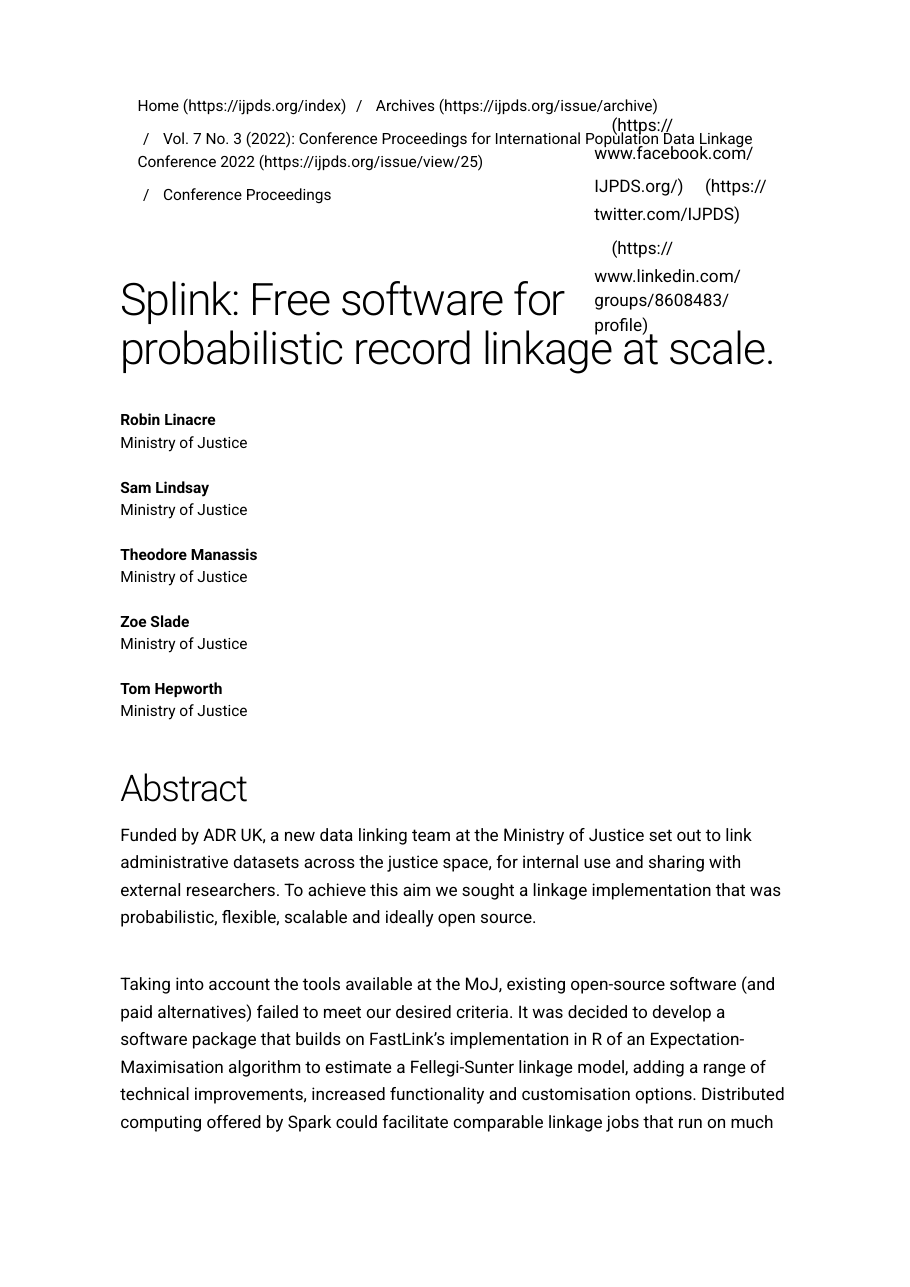
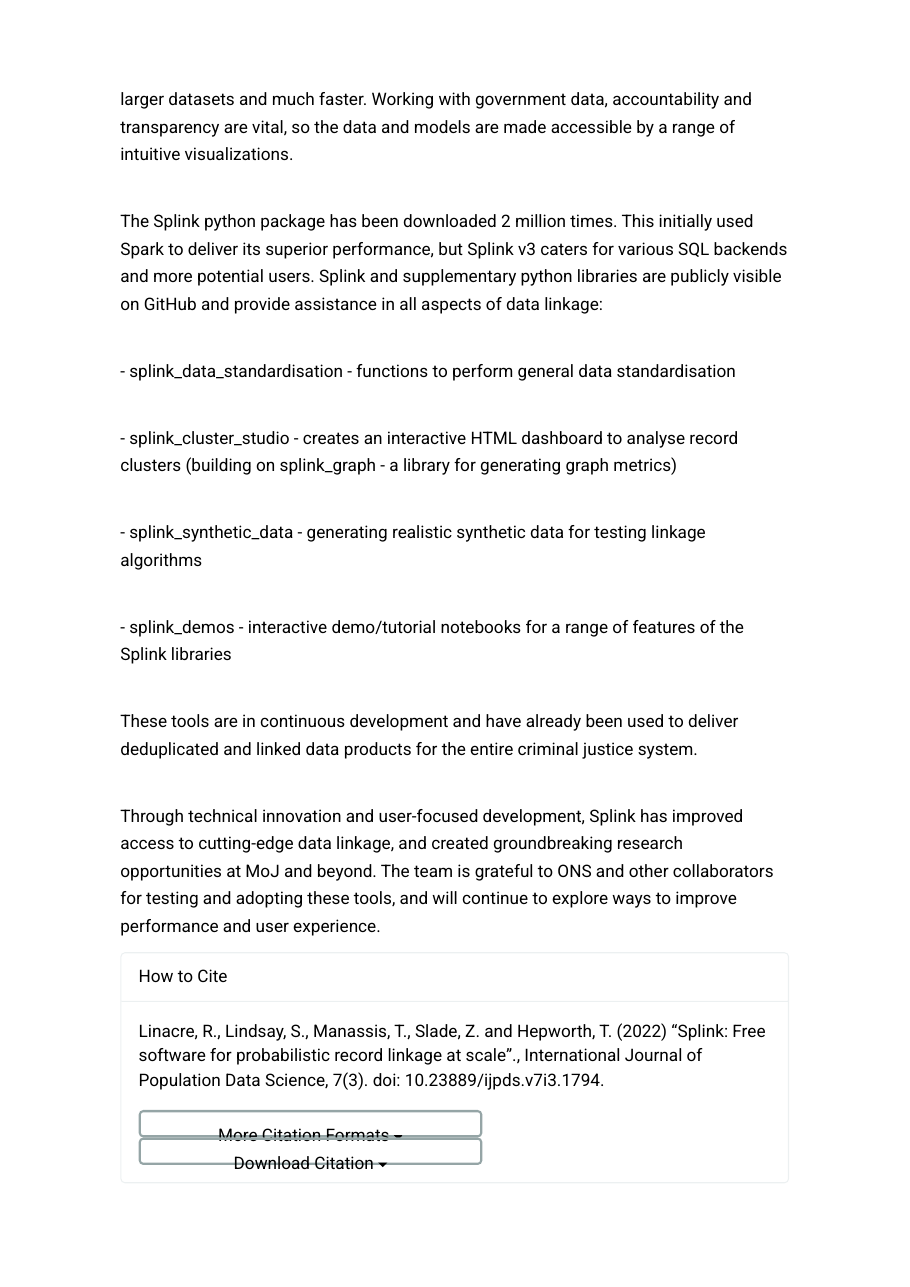
• Open-source library developed by the MoJ data linking team, funded by ADR UK under the "Data First" programme. Implements the Fellegi–Sunter model (the industry-standard statistical method for record linkage), estimated via Expectation-Maximisation, building on FastLink's R implementation. (High confidence — GOV.UK; peer-reviewed IJPDS art. 1794, authored by the developers; official Splink docs; GitHub.)
• Designed for scale: built to link ~100 million records; MoJ has linked ~15 million in under an hour. Backend-agnostic (DuckDB / Spark / AWS Athena). (High.)
• The maths is sound. This report does not allege the algorithm is inaccurate or biased by design. Fellegi–Sunter is mainstream and the published accuracy is high. The concern is governance of what the accurate output enables, not a technical flaw.
• This report is strictly about data-linkage governance. It is unrelated to any software security issue.
🇬🇧 UK — Ministry of Justice · "Data First" (High confidence)
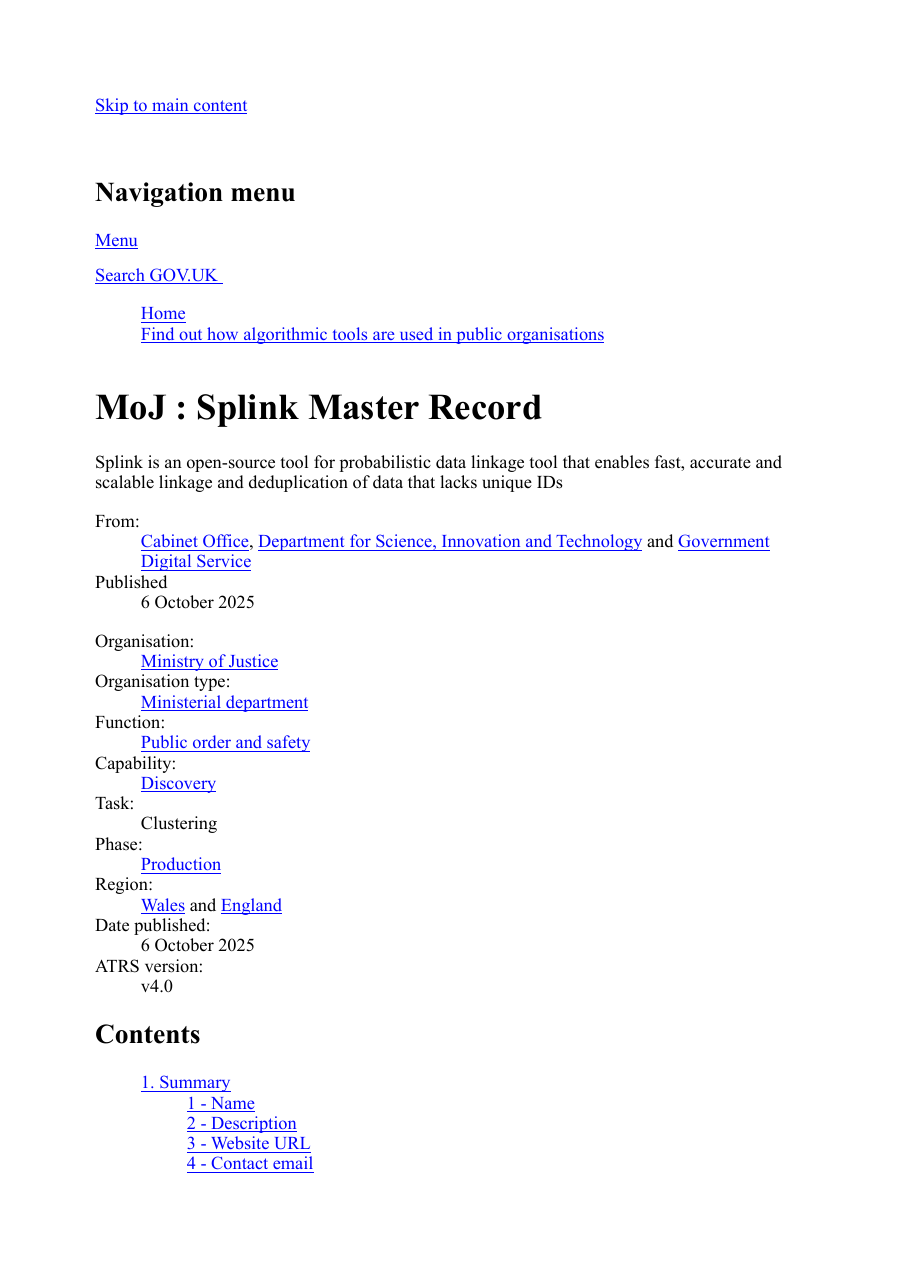
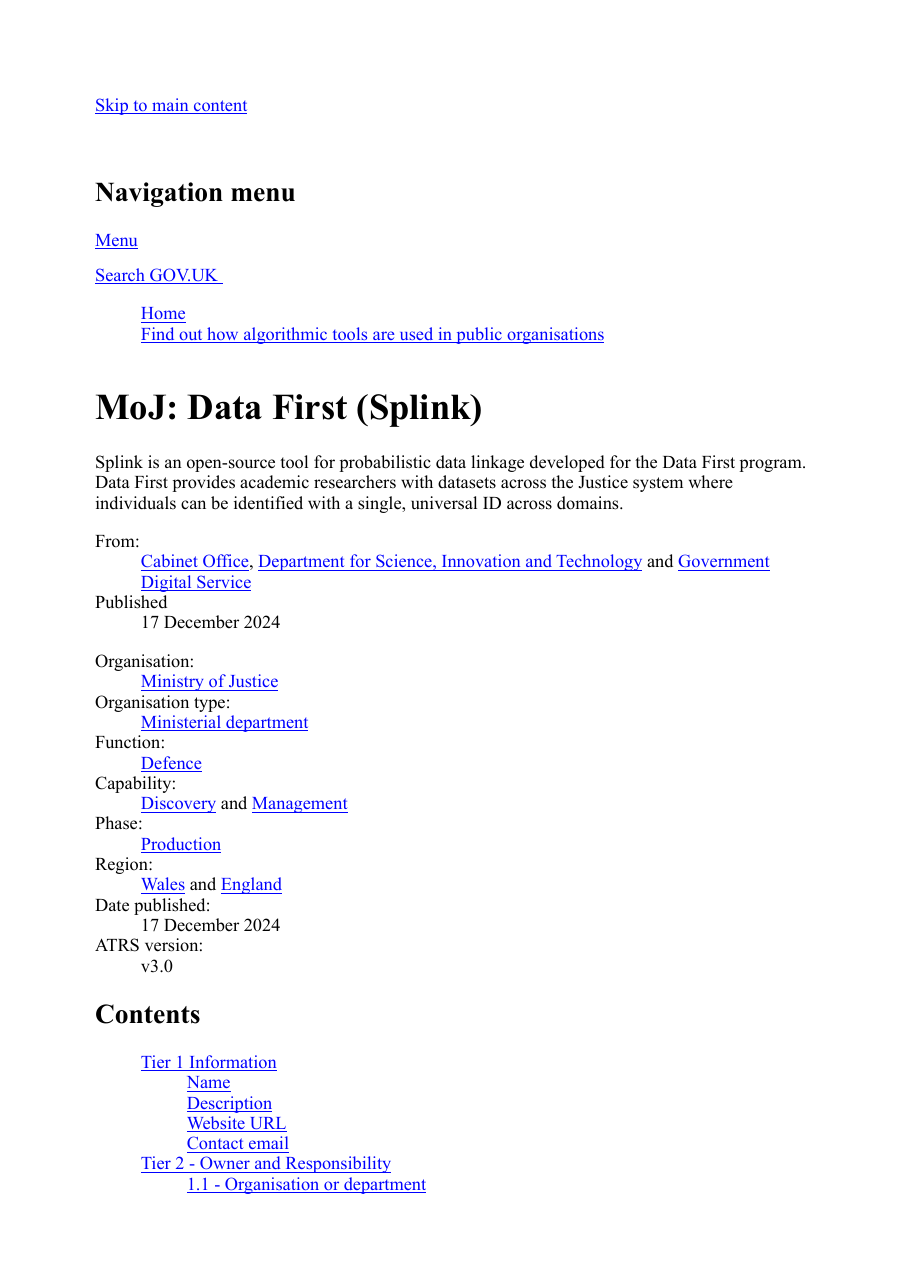
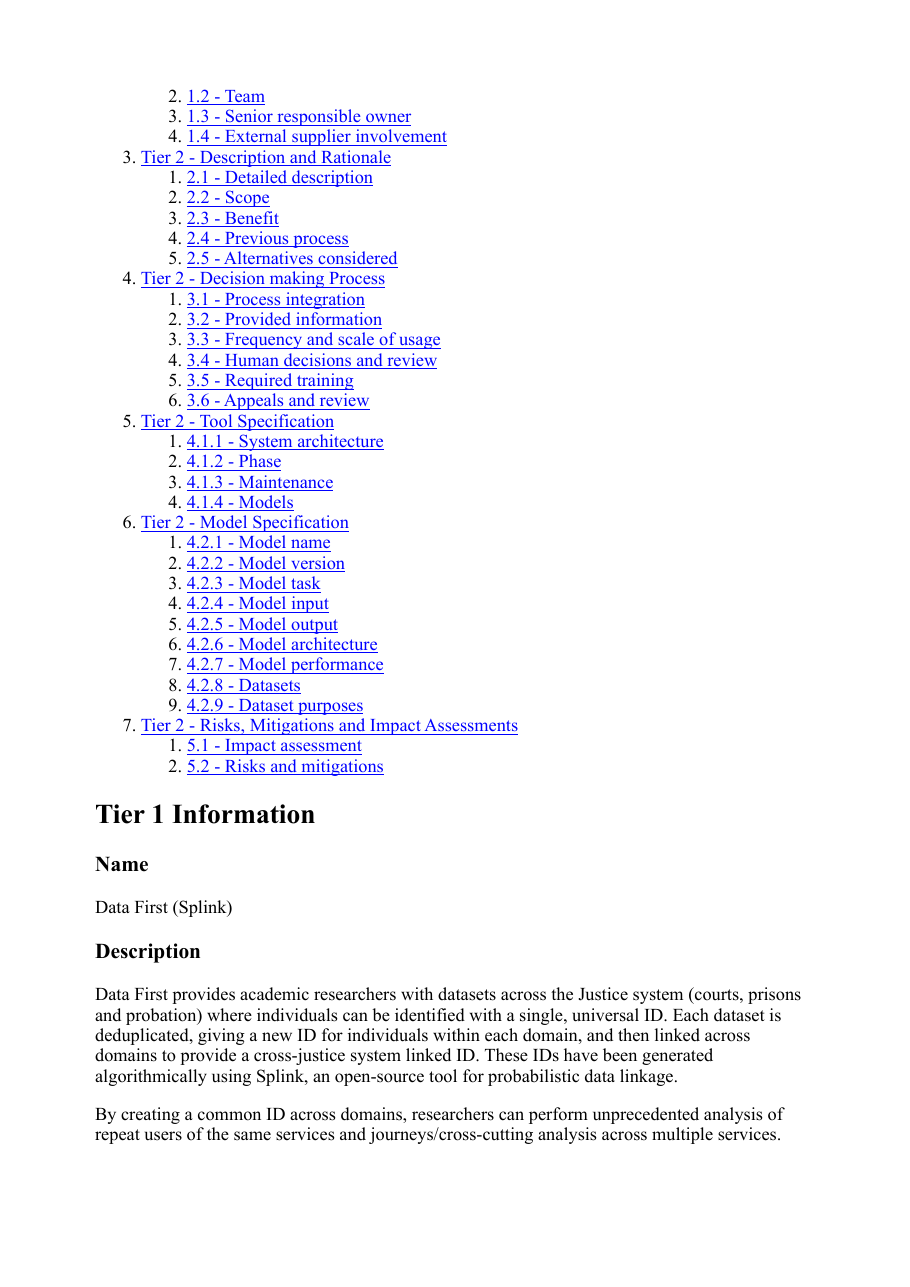
Splink links person records across seven justice-system domains that lack a consistent shared ID — Magistrates'/LIBRA, Crown/Common Platform, family courts, civil courts, prisons (NOMIS), probation (DELIUS), and offender-assessment systems — to track individuals' journeys through the system and identify repeat users. It deduplicates within each domain, then runs a further linkage to create a whole-justice-system linked identifier (Cross Justice System / XJS table). Documented record counts: Common Platform 2.9m, LIBRA 19.6m, NOMIS 2.2m, DELIUS 2.4m. Scope: England & Wales. Researcher-facing data is de-identified.
Sources: GOV.UK Algorithmic Transparency Records (moj-data-first-splink, moj-splink-master-record); ADR UK Data First flagship dataset; IJPDS 1794.
The function-creep flag: MoJ runs Splink in batch (weekly statistical refresh) and in real time — "in courts, to find probation records associated with individuals coming to court." It is piloting "Core Person Record," a real-time system to assign a unique cross-justice person identifier across prisons, probation and criminal courts as records are created/updated. That is a move from statistics to operational identification of named individuals. (Core Person Record is described as a pilot, not yet operational — stated honestly.) (High.)
🇬🇧 UK — Office for National Statistics (High confidence)
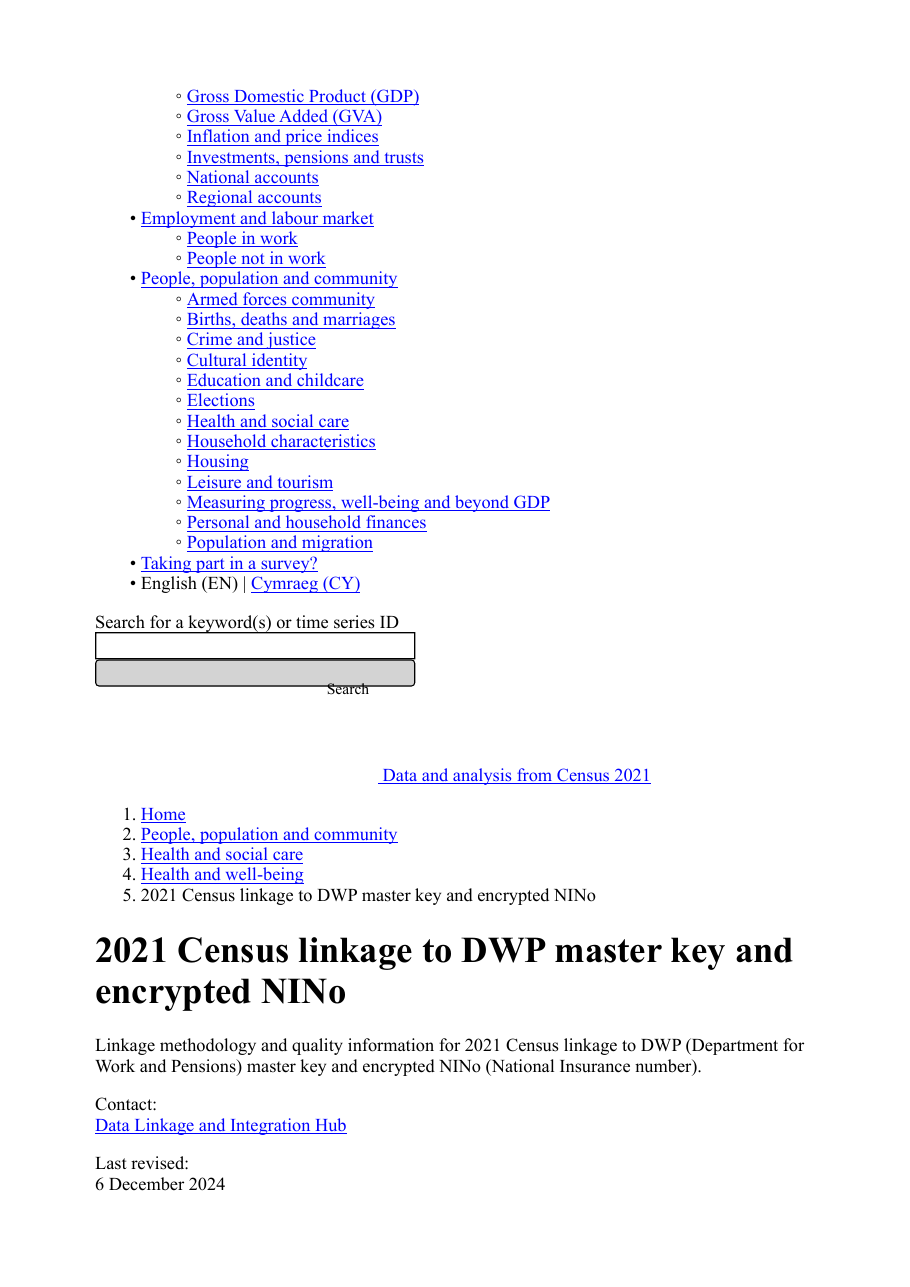
ONS adopted Splink cross-government and is named in the UN Statistics Division catalogue. In the 2021 Census linkage, ONS linked the Census to DWP administrative data: 96.7% of census IDs (56,673,658 records) linked to a DWP master key or encrypted National Insurance number, the encrypted NINo also bridging to HMRC PAYE data; precision 99.87%, recall 99.86%. Nuance, stated plainly: within this specific exercise Splink was applied to the non-linked records during false-negative analysis, not as the primary engine. ONS also uses Splink for its Business Index (former IDBR) and Demographic Index.
Source: ONS methodology, "2021 Census linkage to DWP master key and encrypted NINo" (Dec 2024); IJPDS 1794.
🇬🇧 UK — NHS England (High confidence, but in-progress)
NHS England generates a person-level identifier (Person_ID) via the Master Person Service (the live operational spine matching demographics to the NHS number) and is "currently working on implementing a probabilistic linkage model using Splink" as the engine for a new linkage service. Stated honestly: the Splink work is in progress, distinct from the already-operational Person_ID/MPS mechanism.
Source: NHS England data science "Data Linkage Hub"; IJPDS 3271; NHS Digital MPS handbook.
🇦🇺 Australia — ABS Person Linkage Spine (High confidence)
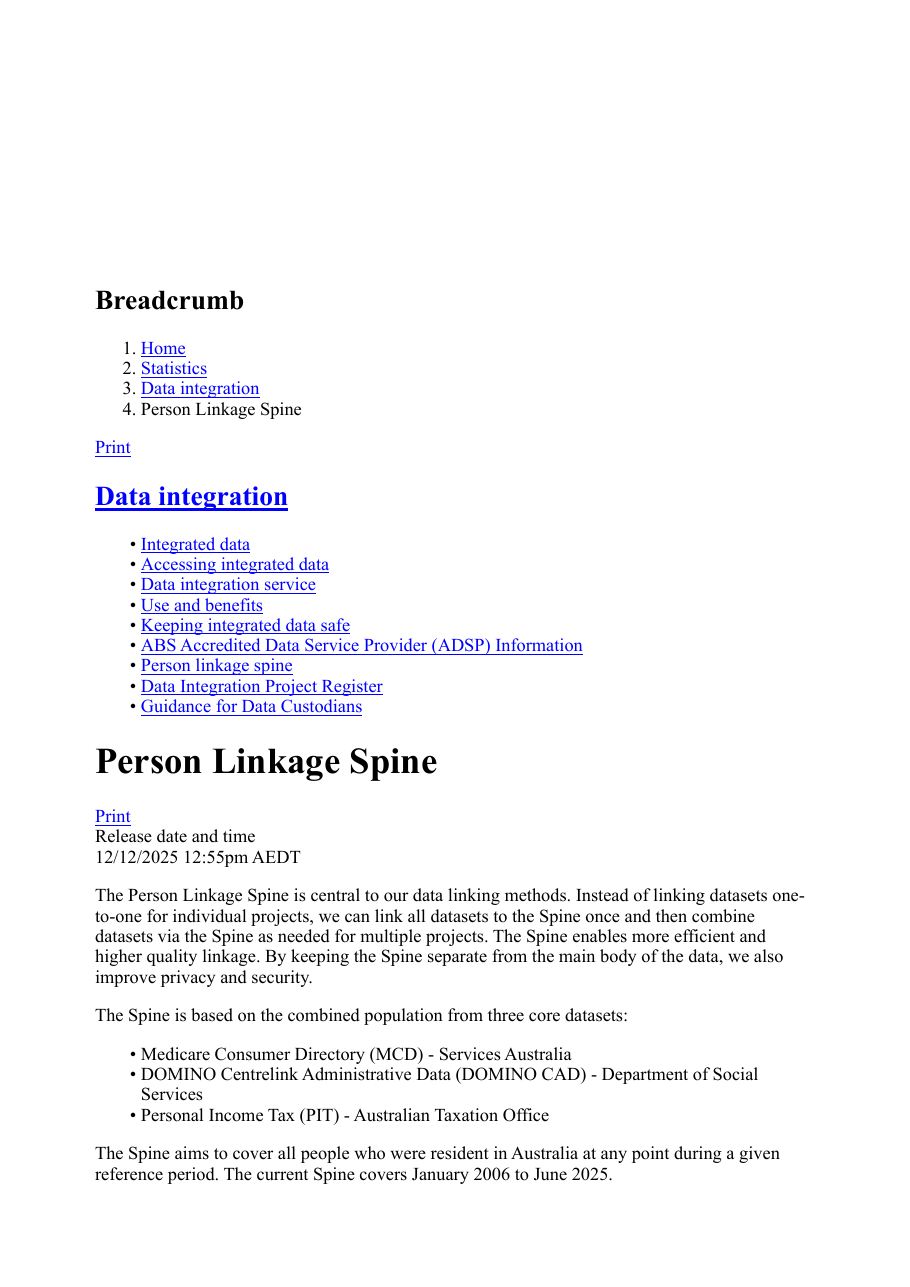
"For the first time in 2025, the Spine was constructed using Splink." It links individuals across three federal agencies: Medicare (Services Australia), Centrelink/DOMINO (Dept. of Social Services), and Personal Income Tax (ATO) — health, welfare, and tax — covering the ever-resident population Jan 2006–June 2025. (High.) Caveat: "ever-resident," slightly broader than "citizens."
Source: ABS, "Person Linkage Spine."
🇦🇺 Australia — National Linkage Spine / National Disability Data Asset (High confidence)
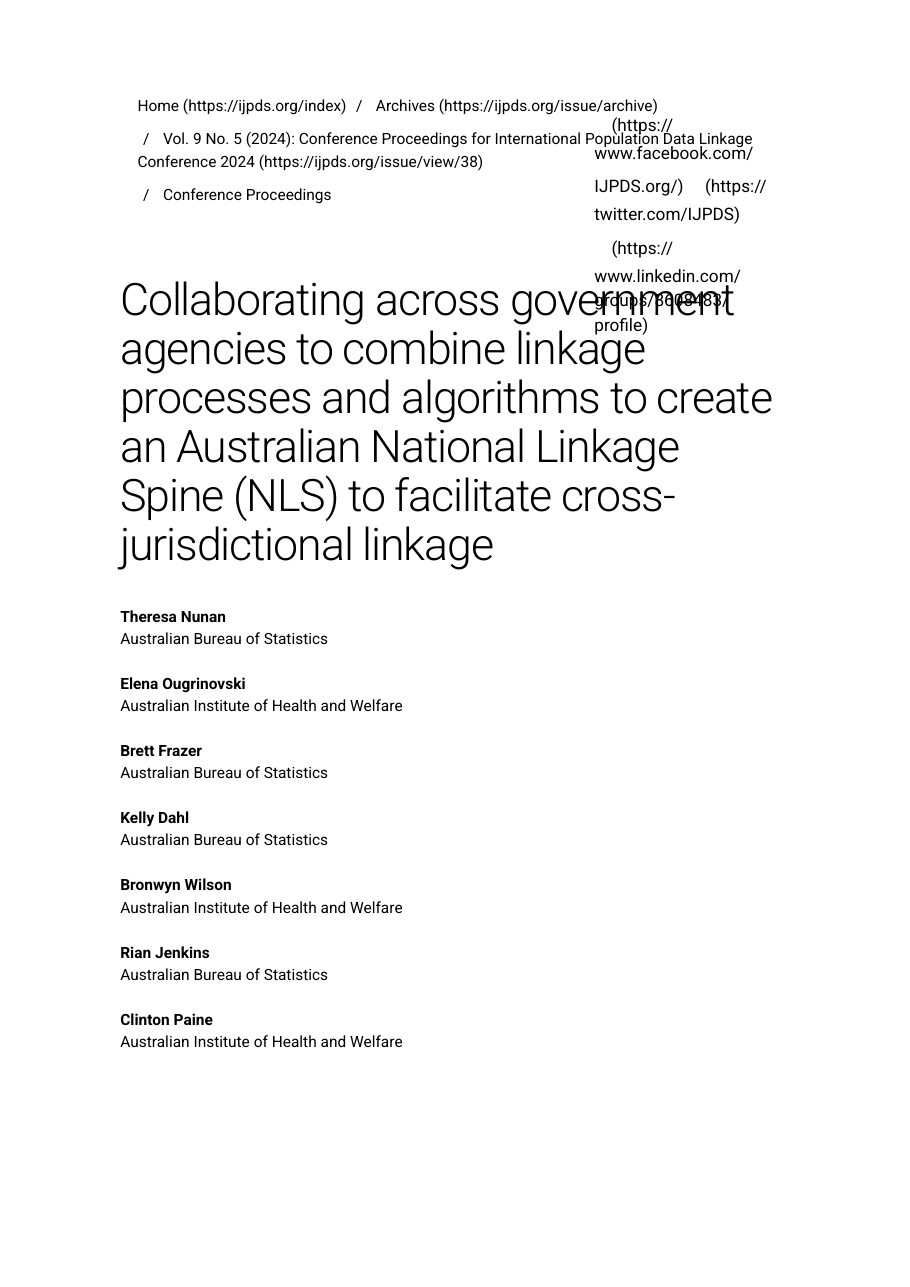
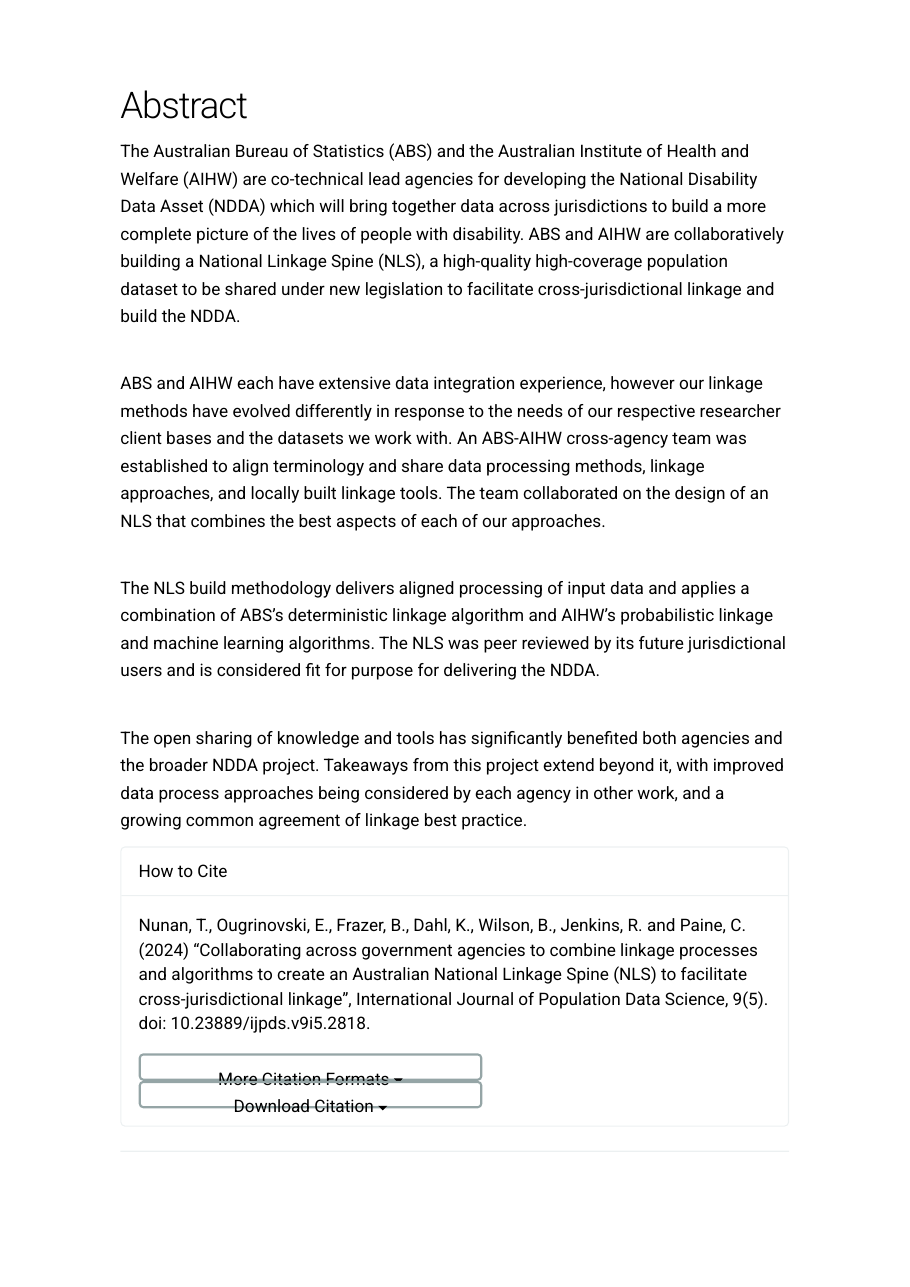
Built jointly by ABS and AIHW (co-technical leads) for the NDDA, performing cross-jurisdictional linkage to assemble person-level (de-identified) profiles of people with disability, using deterministic, probabilistic and ML methods, "to be shared under new legislation" enabling cross-jurisdictional sharing.
Source: IJPDS 2818 (ABS/AIHW-authored); ABS/AIHW NDDA pages; ONDC data-sharing register DSR-03110.
Across every deployment reviewed, the public-facing documents cite governance artefacts — DPIAs / DPIA screenings (MoJ), statutory "public task" processing, new data-sharing legislation (Australia) — but contain no mention of individual citizen consent, individual notification, or an opt-out. The MoJ record's only individual-facing line is that data is "routinely collected… for the purposes of managing court cases and offenders." The ABS spine page offers only a generic "Five Safes / privacy and confidentiality" gesture.
This is the crux — and it must be stated fairly. The absence is partly by design: administrative-data and national-statistics processing legitimately rests on a statutory/public-task legal basis (e.g. the UK Digital Economy Act 2017; Australia's Census and Statistics Act / ABS Act), which does not require consent. So the finding is not "this is illegal" or "there is no legal basis." The finding is the genuine public-interest point: the lawful basis is one most citizens have never heard of, the linkage is invisible to the individual, and there is no personal right to object — even as the same machinery edges toward real-time operational use.
Honesty marker: these are scoped absence-of-content findings about the specific documents reviewed, not proof that no notification exists anywhere. ABS and MoJ both hold statutory authority documented on other pages.
• Genuine public benefit: accurate censuses, health research, reducing duplicate hospital records, understanding reoffending, building the evidence base for disability policy. These are not pretextual.
• The Five Safes framework (safe people/projects/settings/data/outputs) governs access. (GOV.UK data ethics.)
• Accredited/Approved Researcher schemes and the ONS Secure Research Service mean linked microdata is accessed in controlled environments by vetted researchers, with de-identification/pseudonymisation — researchers generally see linked records without direct identifiers. (ONS; UK Statistics Authority; ADR UK ethics.)
• Oversight bodies exist: the Office for Statistics Regulation, the Research Accreditation Panel, the ICO, and (Australia) the OAIC / National Data Commissioner.
The fair framing: the safeguards are real but largely internal and researcher-facing; they protect against misuse of access, not against the prior question of whether population-scale linkage should happen without the individual's knowledge — and they were built for the statistics use case, not the emerging operational one.
• Credit scoring / credit bureaus: NOT substantiated. No primary or secondary source found. Excluded. (If anyone repeats this, it's the line that discredits the rest.)
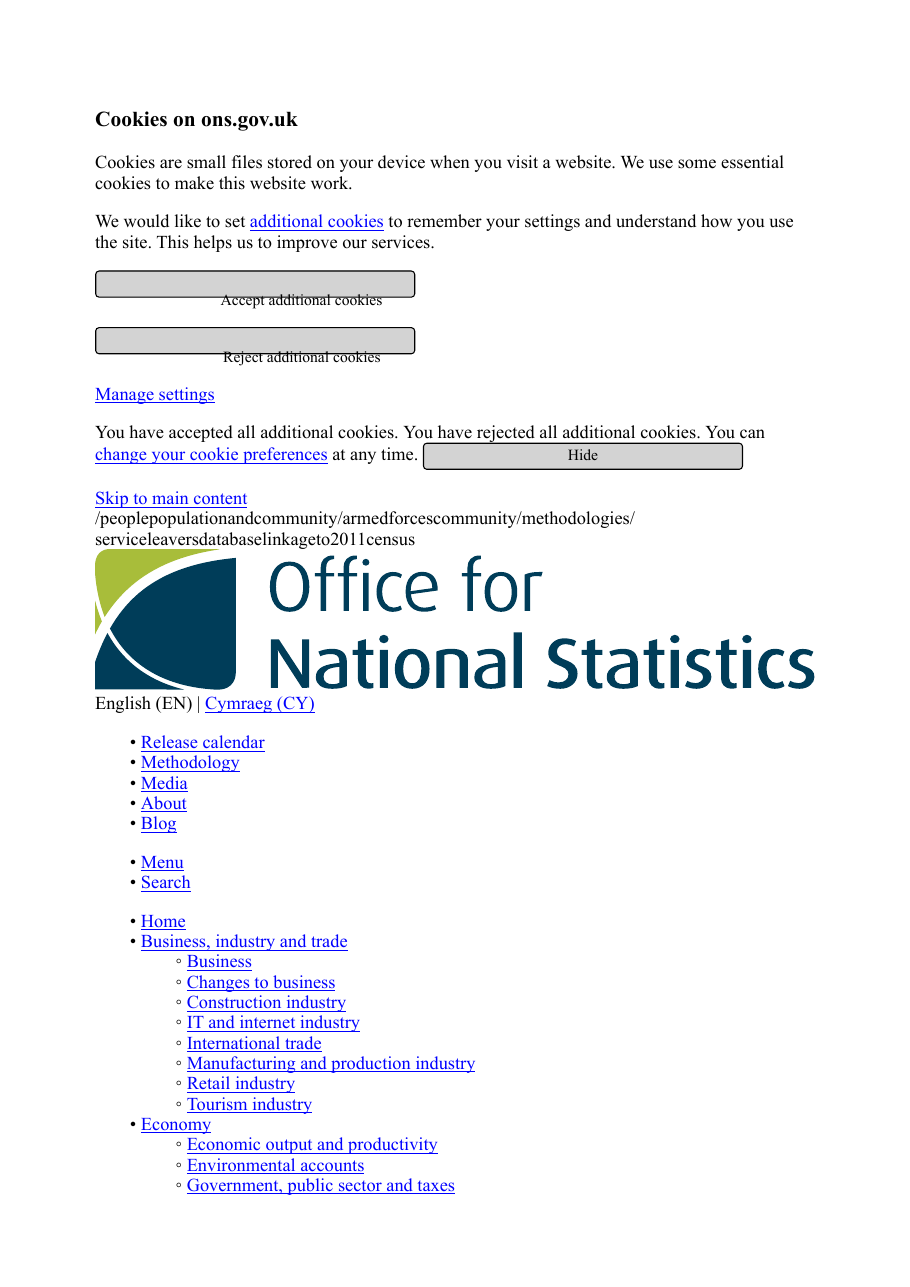
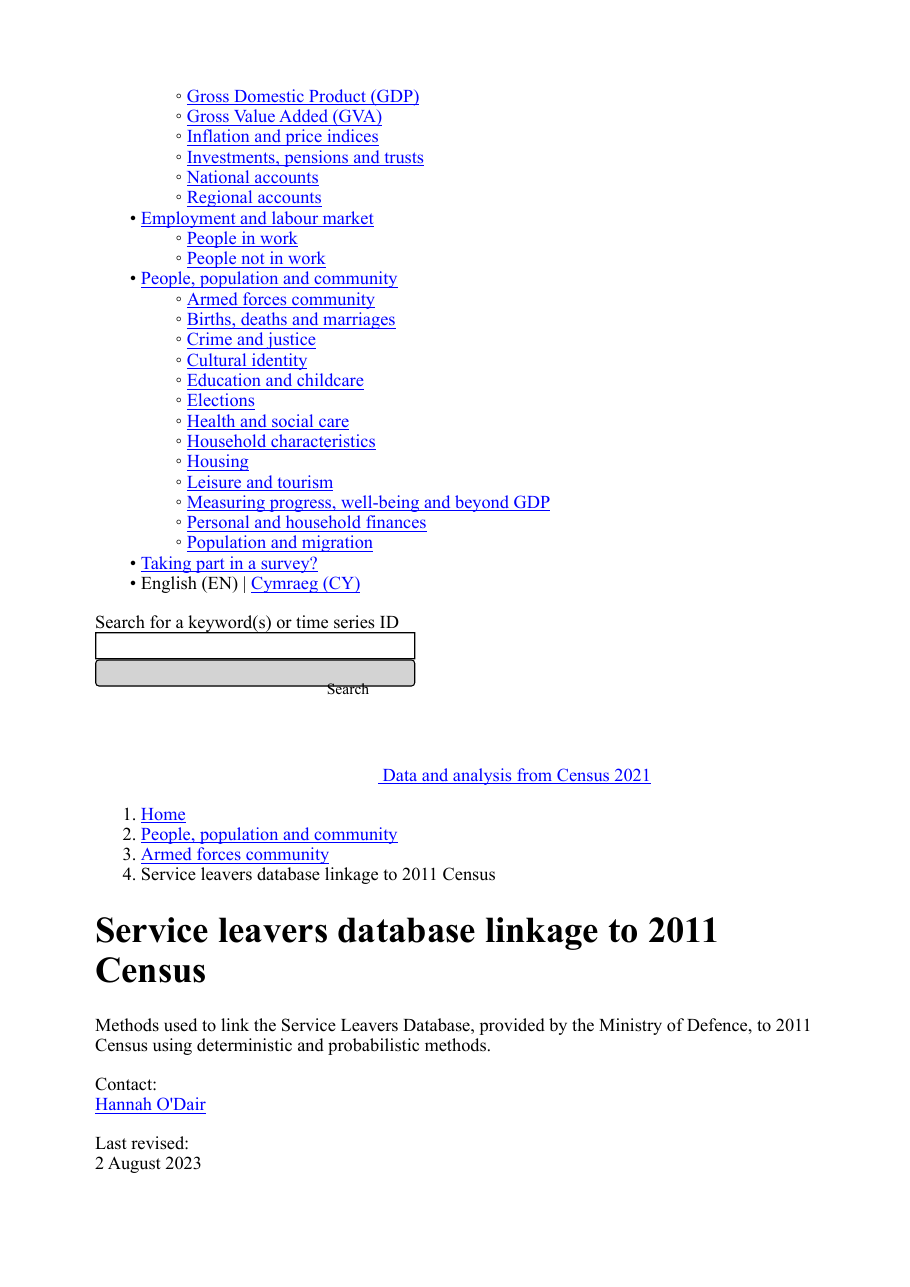
• Asserted but not corroborated in this pass (worth chasing, not yet citable here): UK Health Security Agency HIV-testing linkage; MoD Veterans Card / service-leavers↔Census; US Defense Health Agency (200M+ records); Chile migrant-immunisation linkage; Statistics Canada / Stats NZ / Eurostat adopters. The developers' phrase "ONS and other collaborators" implies more adopters — but "implies" is not "confirmed."
1. What is the full cross-government / international list of agencies running Splink on citizen data?
2. For the pilot/operational systems (MoJ Core Person Record; NHS England's Splink model; ABS NLS under "new legislation"), what is the timeline, and does operational use trigger new notification or transparency duties?
3. Is any individual ever told their records were probabilistically linked across health/justice/tax/benefits — and is there any opt-out, or is it public-task only with no right to object?
4. Which independent body (ICO, OSR, OAIC, National Data Commissioner) has actually audited these specific deployments and their re-identification risk — as opposed to the agencies' own DPIAs?
• GOV.UK — Splink: MoJ's open-source library for probabilistic record linkage at scale
• GOV.UK Algorithmic Transparency Records — moj-data-first-splink; moj-splink-master-record
• ADR UK — Data First (Cross Justice System, England & Wales); ADR UK ethics & responsibility
• IJPDS art. 1794 (Splink, developer-authored, peer-reviewed); art. 2818 (ABS/AIHW NLS/NDDA); art. 3271 (NHS probabilistic linkage)
• ONS — 2021 Census linkage to DWP master key and encrypted NINo (Dec 2024); Secure Research Service; Approved Researcher Scheme; public attitudes to data (June 2023)
• NHS England — Data Science "Data Linkage Hub"; NHS Digital Master Person Service
• ABS — Person Linkage Spine; National Disability Data Asset
• Splink official docs (Fellegi-Sunter) and GitHub (moj-analytical-services/splink)
• Office for Statistics Regulation — "Data sharing and linkage for the public good"
• GOV.UK — The Five Safes framework
• Georgina Sturge, "The silent creep of data linkage" (commentary/blog — framing reference, flagged as non-primary)
Verification: 6 search angles → 22 sources fetched → 102 candidate claims → 25 adversarially verified (2-of-3 refutation vote required to kill a claim) → 25 confirmed, 0 killed → synthesized to 9 findings.
Evidence Locker — their own words, archived
Every claim in this report is built from documents the governments published themselves. Below is each primary source, captured on 2 June 2026 — the incriminating line highlighted in their own words, every page screenshotted, plus a full saved copy (HTML + PDF) in case the live page changes. Most of these pages are not in the Internet Archive, so these captures may be the only preserved copy.
↓ Download the complete evidence bundle (all pages, HTML + PDF + screenshots, 3.9 MB ZIP)