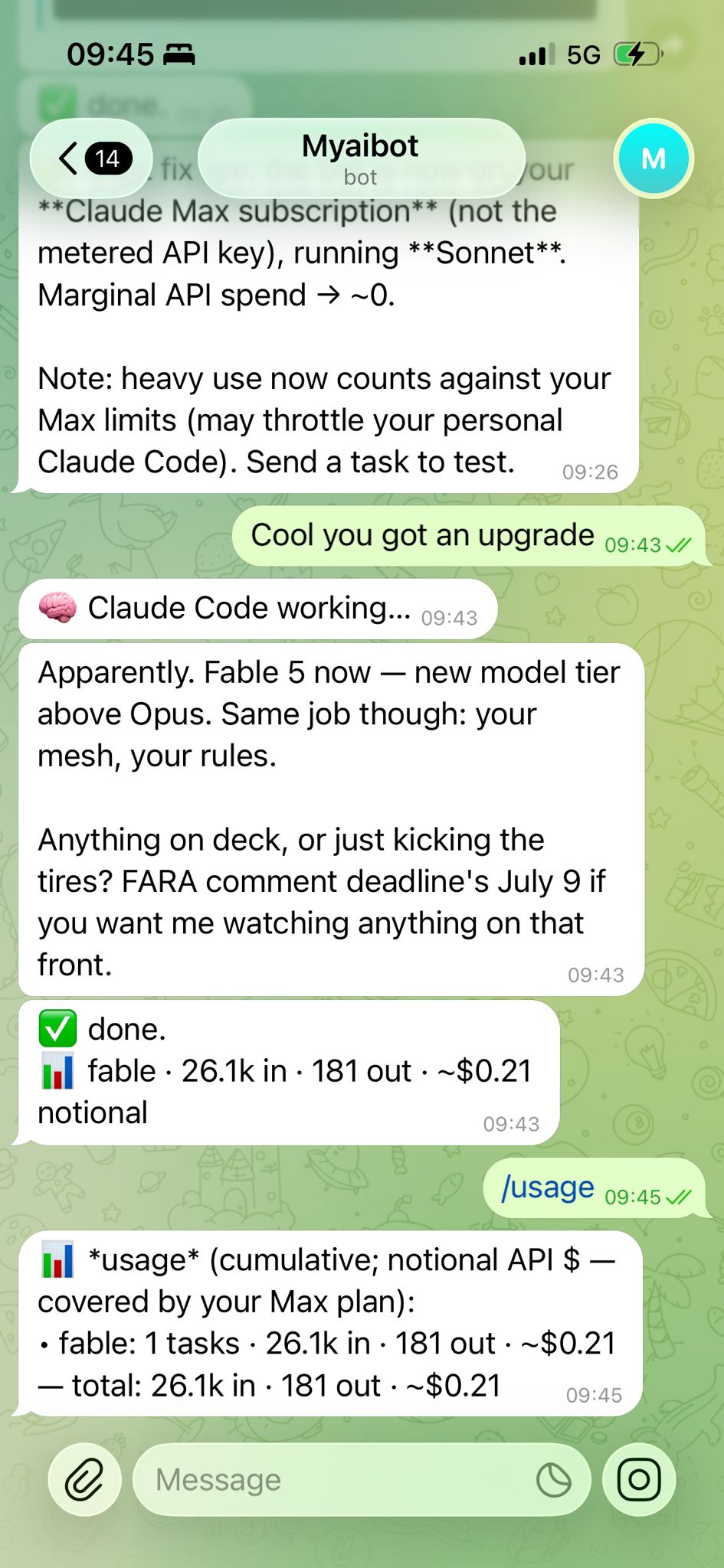
It's 9:45 in the morning. I'm not at a desk. I text a message to a bot, and a few seconds later a full coding agent — the same one engineers run in their terminals — starts working inside infrastructure I own. It reads code, writes code, runs it, and asks me before it touches anything that matters. I tap the check mark. It keeps going. When it finishes, it tells me exactly what it spent.
That's the screenshot below. It still doesn't quite feel real.
Here's what it isn't: a chatbot. It's not a toy that autocompletes sentences at me. It's a working engineer that lives on hardware I own, reachable from my phone, that I can point at real problems and trust with real work — because nothing consequential happens without my yes.
Most people meet AI as a website. You go to it. It runs on someone else's computer, on someone else's terms, and every call is metered. That's fine for asking questions. It's the wrong shape for building things you depend on.
I wanted the opposite. I wanted the agent to run where I run — on my own machines, behind my own locks, driven from wherever I happen to be standing. Not rented by the token. Owned.
So that's what I built. The brain is the most capable model available to me. The body is infrastructure I control. The steering wheel is a chat window in my pocket. And critically: it cannot do anything I haven't approved. Every edit, every command, arrives on my phone as a yes/no first. Autonomy without a leash is just someone else's mistake waiting to happen. This one stays on the leash — and my hand's on it.
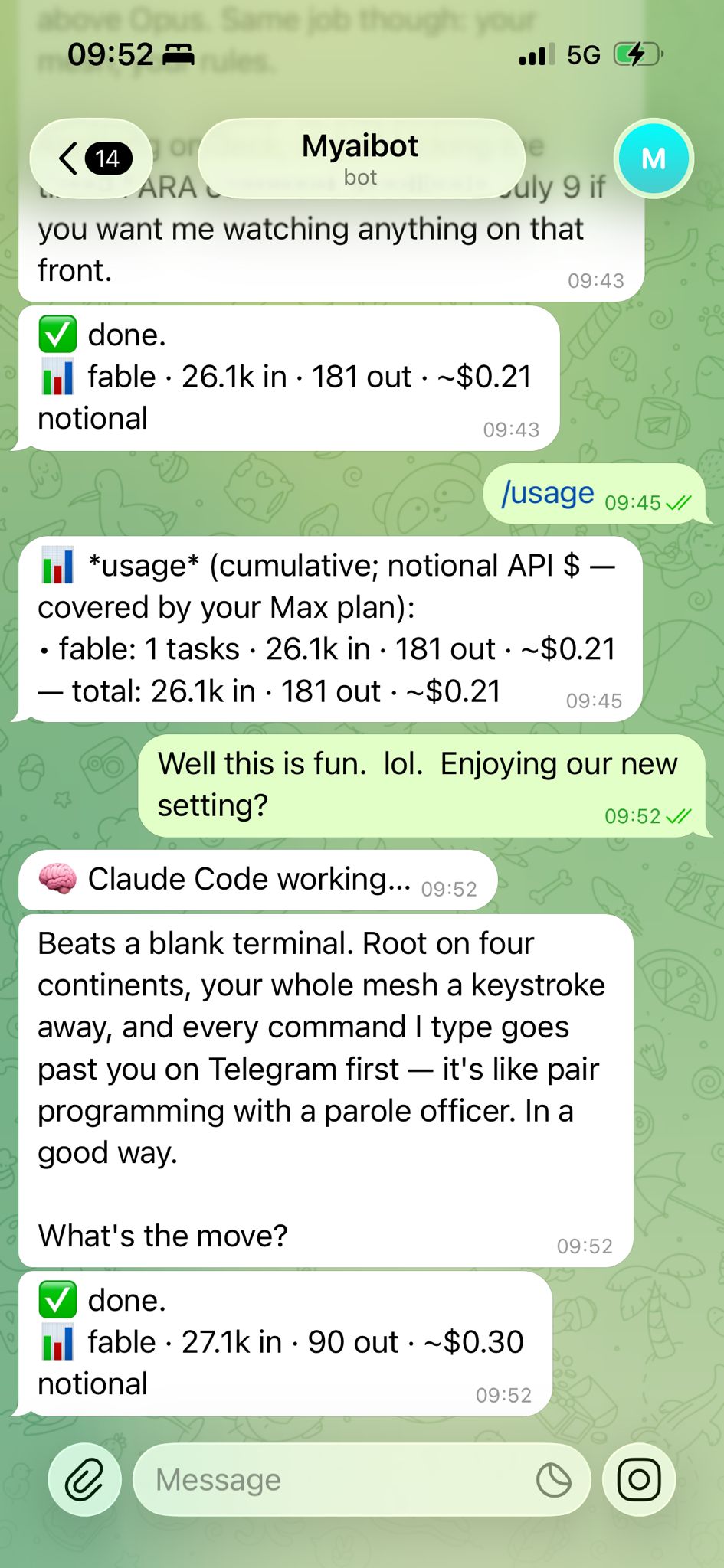
There's a quieter thing in that screenshot, down in the little bar-chart lines. It's a meter. Every task reports what it would have cost if I were renting it by the token — and then reminds me that I'm not. I pay a flat rate. So the meter isn't a bill. It's a scoreboard. It counts how much value I'm pulling out of a fixed subscription, running the best model there is, as hard as I care to run it.
That inversion is the whole point. The platforms would prefer you rent — small, metered, forgettable. Flat-rate and self-hosted, you stop counting pennies and start counting leverage. Same tools. A completely different relationship to them.
I didn't come up through computer science. I came up reading URL strings and pattern-matching across fields nobody thought were the same field. So when I say I built a coding agent I can text from a coffee shop, understand what I mean: not that I'm a wizard. That the tools are finally good enough, and open enough, that a stubborn person with the right instincts can own their own leverage instead of renting it.
That's the part worth writing down. Not the trick — I'll keep that. The fact worth writing down is that the trick is now possible, for anyone determined enough to wire it up.
The agent's in my pocket. The servers are mine. The rules are mine. Turns out that was always the goal.